
Where We Work
Strengthening education in Ethiopia.
Supporting schools in underserved communities.
Our geographic focus
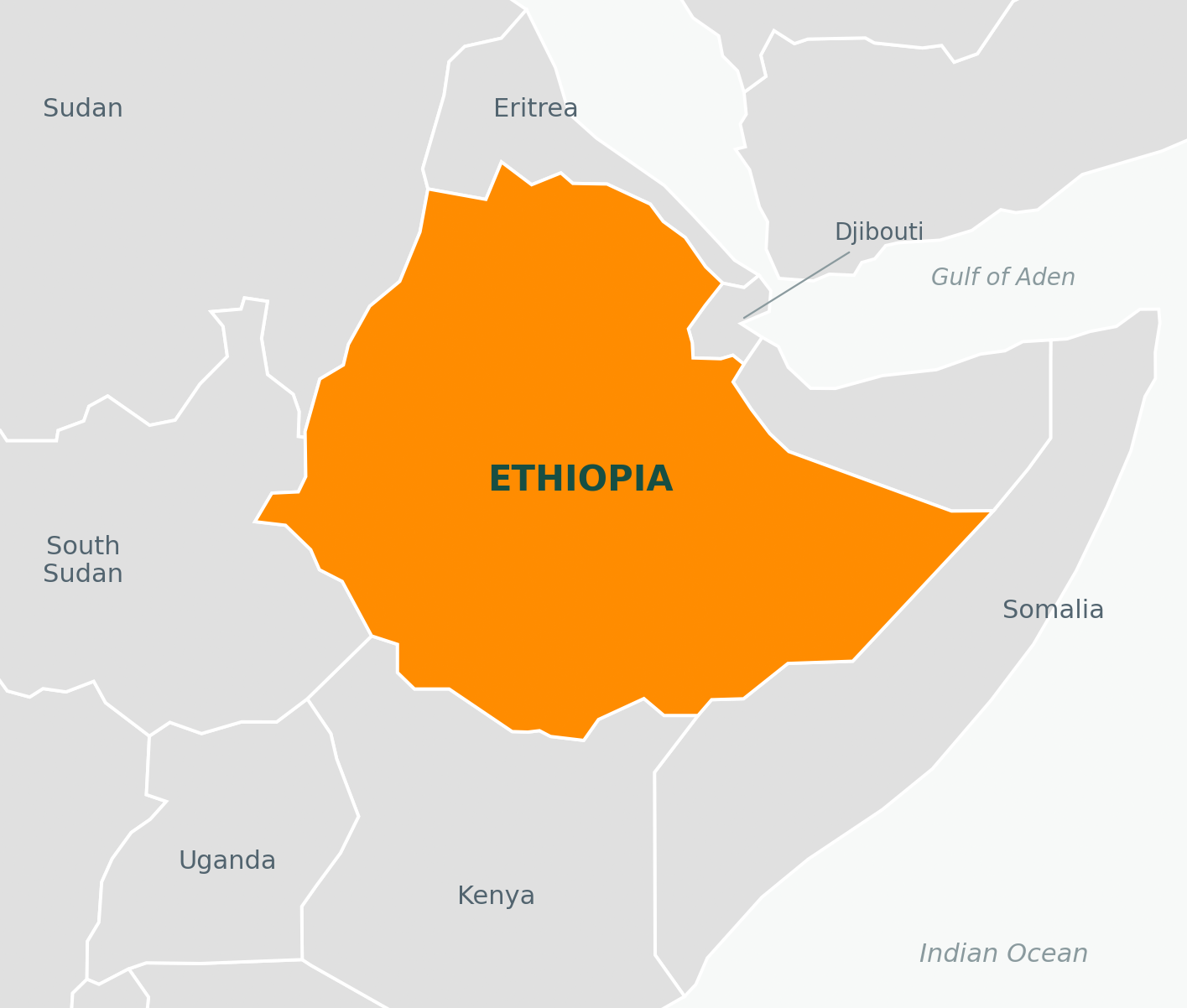
LIFTUP SCHOOLS works to support disadvantaged learners in Ethiopia, particularly in underserved communities. Support is shaped by school-level needs, practical feasibility and fair access.
- Rural education gaps: Children in rural areas face greater barriers to attending school, staying in education and learning well.
- Pressures on families: Poverty and the costs of learning materials and travel can make regular school attendance difficult.
- Unequal access: Girls and children from pastoralist, displaced and refugee communities face additional barriers to education.
Why education matters here
Ethiopia has made progress in expanding access to education. Yet access remains uneven, and being enrolled in school does not always mean that a child is gaining the reading, numeracy and life skills they need.
Conflict, displacement and climate shocks have interrupted schooling in many communities, making continuity of learning a priority.
Education can strengthen children’s skills and future opportunities. Our focus is on practical support shaped by local needs, bringing schools, families and communities together to help children attend, participate and learn.
Education in Ethiopia: key facts
These figures illustrate barriers to education and the wider disadvantages facing rural children. Each uses the date and definition given by its source.
Access to school
7.2 millionChildren reported out of school as of November 2025.
Education Cluster estimate cited in the Geneva Global Hub for Education in Emergencies’ January 2026 brief.
Source: Ethiopia’s Education Crisis (PDF)Foundational reading
90%Estimated share of children at late primary age below minimum reading proficiency, adjusted for children out of school.
World Bank–UNESCO: 2015 data; published 2024.
Source: Ethiopia Learning Poverty Brief (PDF)Rural disadvantage
95% vs 46%Children experiencing multidimensional poverty in rural areas compared with large city areas.
UNICEF and Central Statistical Agency analysis of 2016 household surveys.
Source: UNICEF, Faces of Child Poverty (2021)How we select schools
Selection depends on demonstrated educational need, disadvantage, feasibility, likely benefit and fair access.
Verify needs
We verify school identity, educational needs, permissions and the ability to receive and use suitable supplies.
Approve support
Trustees document selection, manage conflicts of interest and approve realistic budgets.
Confirm benefit
We obtain delivery evidence and acknowledgement, then review spending, assess usefulness of the support and lessons learned.
Sources and context
These dated national figures provide context; they are not current school-level assessments. Sources include Ethiopia’s Ministry of Education, UNICEF, the World Bank and the Geneva Global Hub for Education in Emergencies. Conditions vary between communities; these sources do not describe every school or measure LIFTUP SCHOOLS’ impact.
- UNICEF Ethiopia: Learning and development — rural access, participation and inclusion.
- UNICEF and Ethiopia’s Central Statistical Agency: Faces of Poverty (2020) — child poverty and access to services.
- World Bank–UNESCO: Ethiopia Learning Poverty Brief (2024, PDF) — reading estimate based on 2015 data.
- Geneva Global Hub for Education in Emergencies: Ethiopia’s Education Crisis (January 2026, PDF) — out-of-school estimate as of November 2025.
- World Bank: Better data for boosting student learning (2023) — teaching support, resources and rural infrastructure gaps.
- UNICEF: Ethiopia humanitarian appeal (2026) — conflict, displacement and climate-related disruption.
- Ethiopia Ministry of Education: Education Statistics Annual Abstract 2022/23 (PDF) — official statistics on enrolment, teachers and education provision.
Explore opportunities to support schools
Explore how locally purchased educational supplies and donated ICT equipment can support schools.